Heart Rate Zone Calculator
Find your estimated maximum heart rate and the heart-rate ranges for light, moderate, vigorous and near-maximal exercise. Add your resting heart rate for a more personal result.
Heart Rate Zone Calculator
Runs in your browser. Nothing is sent or stored unless you choose to save a result to a free account.
This calculator needs JavaScript. The formula and sources are below so you can work it out by hand.
How this is calculated & sources
Tanaka: HRmax = 208 − 0.7 × age (or your measured max). With resting heart rate, Karvonen: target = HRrest + % × (HRmax − HRrest). Intensity bands (ACSM): light 30–39 % HRR (57–63 % HRmax), moderate 40–59 % HRR (64–76 %), vigorous 60–89 % HRR (77–95 %), near-maximal ≥90 % HRR (≥96 %).
- Tanaka et al. (2001), J Am Coll Cardiol – age-predicted maximal heart rate
- Garber et al. (2011), ACSM position stand – exercise intensity
Formula reviewed against the sources above · Tool version 1.2.3
Please note: Estimates for healthy adults, for general information only – not medical or nutrition advice and not a diagnosis. Do not use for children or teens, during pregnancy or breastfeeding, or if you have a medical condition, without a professional. If food or weight feels hard to control, support is available from your doctor or eating-disorder organisations. Medical disclaimer.
Related in Electronics › Wearable
See allAs an Amazon Associate I earn from qualifying purchases.



Products are matched to the tool’s topic, not to your results. We research products from specifications; we do not claim to have tested them.
How the zones are calculated
Maximum heart rate is estimated with the Tanaka equation, 208 − 0.7 × age, from a 2001 study in the Journal of the American College of Cardiology that combined a meta-analysis of 351 studies with a laboratory study. It replaces the older 220 − age rule, which underestimates maximum heart rate in older adults. A 40-year-old has an estimated maximum of 180 beats per minute. If you know your measured maximum from a supervised test, enter it and it will be used instead.
Intensity bands follow the American College of Sports Medicine position stand (Garber et al., 2011). Without a resting heart rate, they are shown as a percentage of maximum heart rate. With a resting heart rate, the tool uses the Karvonen method, heart-rate reserve: resting heart rate plus a percentage of the gap between resting and maximum. This accounts for fitness, because fitter people usually have lower resting heart rates.
How to use the zones
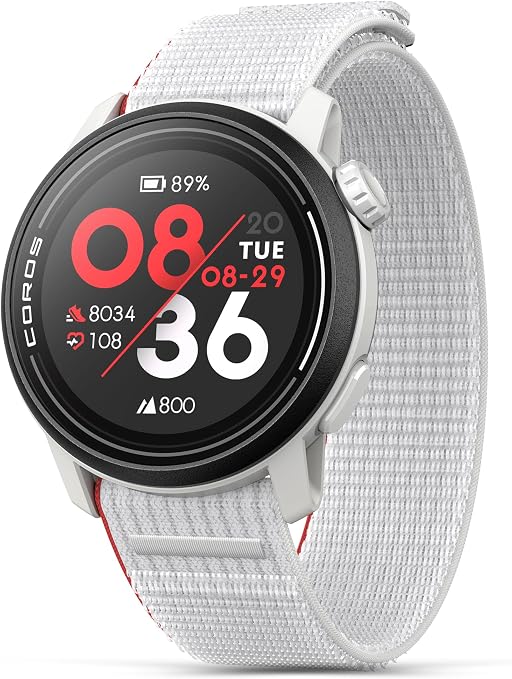
Public-health guidelines are built around moderate and vigorous activity. Moderate effort lets you talk but not sing; vigorous effort makes it hard to say more than a few words. Many people do most of their cardio in the moderate band and add short vigorous intervals. A chest strap or a wrist tracker makes it easy to stay in range on a treadmill, bike or rower.
Measure resting heart rate in the morning before getting up, over a few days, and use the average.
Limitations
Any age-based formula can be off by more than ten beats per minute for an individual. Medicines such as beta-blockers, heat, caffeine, dehydration and illness change heart rate. If you have a heart condition or symptoms such as chest pain or dizziness during exercise, stop and seek medical advice.
Frequently asked questions
Why not use 220 minus age?
Tanaka and colleagues (2001) showed that 220 − age underestimates maximal heart rate in older adults. Their equation, 208 − 0.7 × age, is based on a meta-analysis of 351 studies and a laboratory study.
Do I need a chest strap?
Chest straps measure the electrical signal of the heart and are usually more responsive during intervals than wrist sensors. A wrist tracker is fine for steady effort.
What if I take heart-rate-lowering medicine?
Beta-blockers and some other medicines lower heart rate, so formula-based zones do not apply. Ask your doctor for a personal range.