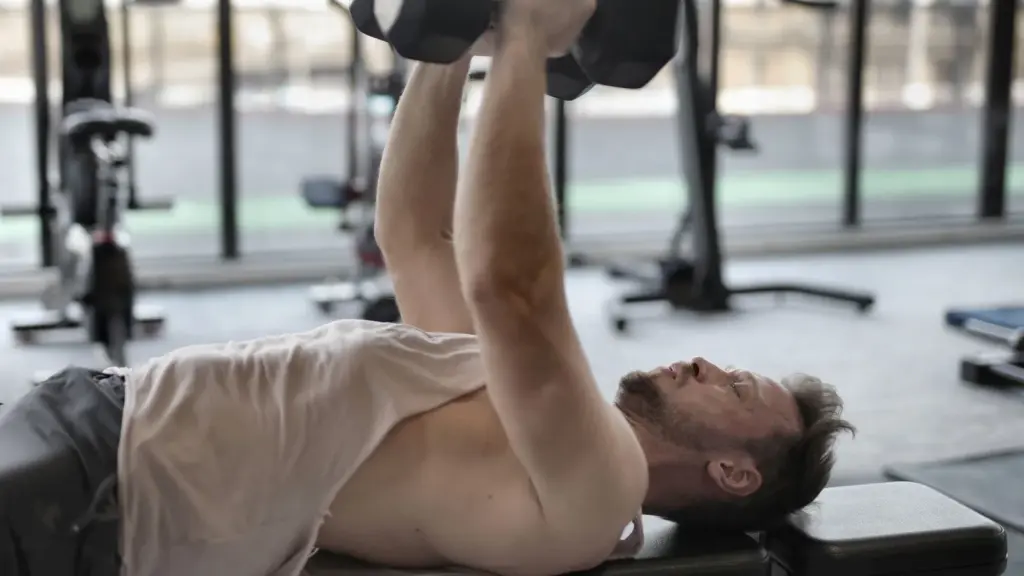
Photo: Andrea Piacquadio / Pexels
Free Weights vs Machines: What the Research Says About Strength and Muscle
As an Amazon Associate I earn from qualifying purchases. Affiliate disclosure
Key takeaways
- In head-to-head comparisons, free weights and machines produced similar gains in strength, jump height and muscle size (13 studies, 1,016 adults). Evidence: Moderate
- Strength gains are specific: you tend to get better at the kind of lift you practise, so test and train with the same tools. Evidence: Moderate
- For health, guidelines ask for muscle-strengthening work for all major muscle groups on 2 or more days a week; either equipment type counts. Evidence: Strong
- Emergency-room data link most home and gym weight-training injuries to free weights, often a weight dropping on the person, but these are counts, not risk rates. Evidence: Limited
“Free weights build real strength, machines are for beginners” is one of the oldest arguments in the gym. If you are equipping a home gym, the question matters for your budget and floor space too: a pair of adjustable dumbbells and a bench costs and occupies far less than a cable stack or a leg-press machine.
The short answer from the research so far: when the two are compared directly, they lead to similar gains in strength and muscle size. The more useful question is which one you will use consistently and safely in your space.
Evidence at a glance
| Question | What the evidence suggests | Evidence level | Main sources |
|---|---|---|---|
| Do free weights build more strength than machines? | No overall difference when strength is compared directly, but people improve most on the type of equipment they train with. | Moderate | Meta-analysis [1] |
| Do free weights build more muscle? | No difference in muscle growth in the studies that measured it. | Moderate (only 5 studies measured muscle size) | Meta-analysis [1] |
| Does equipment type matter for health benefits? | Guidelines specify muscle groups, intensity and frequency, not equipment type. | Strong | ACSM, HHS [3][4] |
| Which is safer? | Most emergency-room weight-training injuries involve free weights, but there is no data on injury rate per hour of training. | Limited | US injury data [5] |
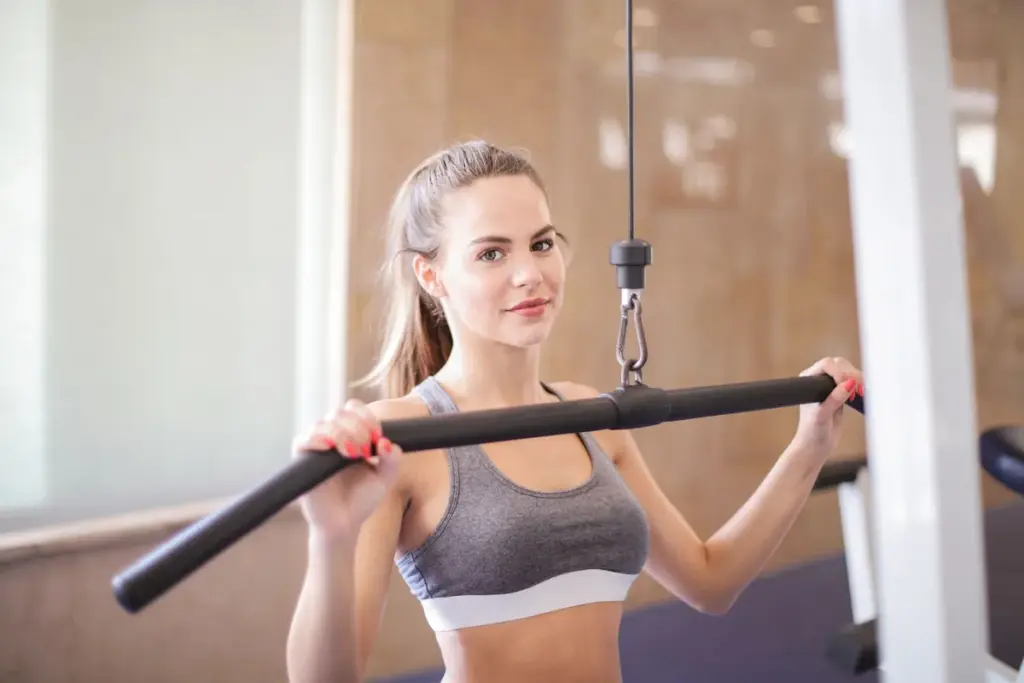
Free weights vs machines side by side
| Free weights (dumbbells, barbells, kettlebells) | Machines (selectorised, plate-loaded, cables) | |
|---|---|---|
| Movement path | You control the path and balance the load yourself. | The machine guides the path; less balancing needed. |
| Learning curve | Higher: technique takes practice and ideally coaching. | Lower: usually easy to set up and repeat. |
| Space and cost at home | Compact: adjustable dumbbells and a bench cover most exercises. | Large and expensive per exercise; all-in-one machines take a lot of floor space. |
| Loading steps | Depends on the dumbbell increments or plates you own. | Usually small, fixed steps on the stack. |
| Training alone | Heavy bench presses and squats need racks, safeties or a spotter. | Most machines let you stop a set without a spotter. |
| Skill transfer | Better transfer to free-weight lifts and tests. | Better transfer to machine-based tests. |
How it works
Muscles respond to the tension and effort of a set, not to the label on the equipment. The ACSM progression position stand describes the main variables of a strength programme: exercise choice and order, load (for example, 8–12 repetition maximum for novices), number of sets, rest periods, and how often you train [2]. All of these can be set with free weights or machines.
The differences lie elsewhere:
- Stability. With a dumbbell you also have to stop the weight drifting forwards, backwards or sideways. That is a skill, and it improves with practice.
- Specificity. Your nervous system gets better at the movement you practise. If you test your strength on a barbell squat, training on a barbell squat tends to show bigger gains on that test than training on a leg press, and the reverse is also true [1].
- Convenience. Machines make it easier to work one muscle with little set-up, and to stop a set safely when you can no longer complete a repetition.
What the research says
The most complete summary to date is a 2023 systematic review and meta-analysis by Haugen and colleagues [1]. It included 13 studies that directly compared free-weight and machine-based training for at least 6 weeks in adults aged 18–60, with a total of 1,016 participants.
- Strength compared directly: no significant difference between the two approaches for dynamic or isometric strength.
- Specific tests: free-weight training improved free-weight test results more than machine training did, and machine training tended to improve machine test results more.
- Jump height: no significant difference (5 studies).
- Muscle growth: no significant difference (5 studies).
The authors concluded that the choice between free weights and machines comes down to individual preferences and goals [1].
Health guidelines point the same way. The U.S. Physical Activity Guidelines ask adults to do muscle-strengthening activities of moderate or greater intensity that involve all major muscle groups on 2 or more days a week [4]. The ACSM recommends resistance training for each major muscle group 2–3 days a week [3]. Neither requires a particular type of equipment; body weight, bands, dumbbells and machines can all count.
Limits of the research
- Few studies measured muscle size. The muscle-growth result comes from only 5 studies, so a small difference could have been missed [1].
- Who was studied. Participants were adults aged 18–60, and most were men (789 men vs 219 women). Results may differ for older adults or people with health conditions.
- Short studies. The minimum length was 6 weeks. Long-term differences, for example in joint health or injury, were not the focus.
- Injury data are counts, not risks. The US emergency-department study counts injuries; it does not tell you how many hours people spent on each type of equipment, so it cannot show that one type is more dangerous per session [5].
Who should be careful
- Beginners training alone with heavy free weights. In US emergency-department data from 1990 to 2007, free weights accounted for 90.4% of weight-training injuries, and weights dropping on the person were the most common cause (65.5%) [5].
- Older lifters. In the same data, people aged 55 and over were more often injured on machines than younger lifters (18.2% vs 9.3% of their injuries) [5]. Machines are not automatically risk-free; set-up and pinch points matter.
- Anyone with joint pain, recent surgery or a heart condition. Ask a doctor or physiotherapist which exercises suit you before starting.
- Heavy pressing and squatting. The NSCA standards call for attentive spotting, together with safety equipment such as power racks, for free-weight exercises where the bar is supported on the trunk or moved over the head or face [6].
How to apply this at home
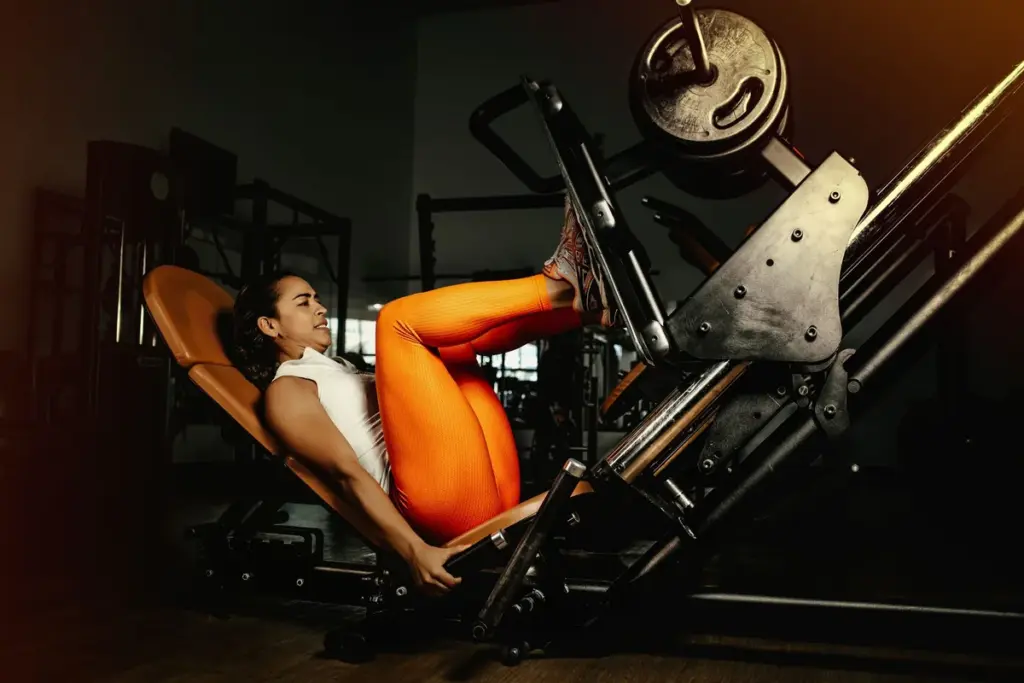
- Pick what fits your space and will keep you training. For most small home gyms, adjustable dumbbells plus a sturdy adjustable bench cover presses, rows, squats, lunges and hinges. Our guide on choosing adjustable dumbbells for a small apartment covers weight ranges and lock mechanisms.
- Cover every major muscle group at least twice a week [4]. The free Fibody Workout Planner builds a weekly plan around the equipment you actually own.
- Start with a load you can lift for about 8–12 controlled repetitions [2], and increase gradually (see Training Methods).
- Track strength on the equipment you train with. Because gains are specific [1], compare like with like. To track progress without testing a true maximum, estimate it from a set of several reps with the 1RM Calculator.
- Make solo training safer. Use dumbbells rather than a barbell for heavy presses if you have no rack or spotter, protect the floor (rubber tiles vs foam mats), and see Safety & Recommendations.
- Support recovery. Protein needs rise with resistance training; the Protein Calculator gives a daily range for your body weight and goal.
A free Fibody membership lets you save your plan and 1RM estimates so you can see progress over time.
Frequently asked questions
Are machines only for beginners?
No. In direct comparisons, machine training produced similar strength and muscle gains to free-weight training [1]. Many experienced lifters use both.
Can I build muscle with only dumbbells at home?
Yes, as long as the load is challenging enough and you progress it over time. The research found no difference in muscle growth between free weights and machines [1]; the limit at home is usually the maximum weight of your dumbbells.
Are free weights more dangerous?
Most weight-training injuries seen in US emergency departments involved free weights, often a weight dropping on the person [5]. That data cannot show the risk per session, but it supports controlled technique, sensible loads, and racks or spotters for heavy lifts.
Should I switch between free weights and machines?
You can. Mixing both is reasonable; if you have a specific goal, such as a heavier barbell squat, train with the equipment you will be tested on [1].
Related on Fibody
- Tool: 1RM Calculator — estimate your max from a submaximal set.
- Tool: Workout Planner — a weekly plan built around your equipment.
- Method: Strength training and Bodybuilding.
- Guide: How to Choose Adjustable Dumbbells for a Small Apartment.
- Shop: Home strength equipment.
More in Equipment Comparisons
References
- Haugen ME, Vårvik FT, Larsen S, et al. Effect of free-weight vs. machine-based strength training on maximal strength, hypertrophy and jump performance – a systematic review and meta-analysis. BMC Sports Sci Med Rehabil. 2023;15:103. PMID 37582807. pubmed.ncbi.nlm.nih.gov/37582807/ (accessed 31 October 2026)
- American College of Sports Medicine. Position stand: Progression models in resistance training for healthy adults. Med Sci Sports Exerc. 2009;41(3):687-708. PMID 19204579. pubmed.ncbi.nlm.nih.gov/19204579/ (accessed 31 October 2026)
- Garber CE, et al.; American College of Sports Medicine. Position stand: Quantity and quality of exercise for developing and maintaining cardiorespiratory, musculoskeletal, and neuromotor fitness in apparently healthy adults. Med Sci Sports Exerc. 2011;43(7):1334-59. PMID 21694556. pubmed.ncbi.nlm.nih.gov/21694556/ (accessed 31 October 2026)
- U.S. Department of Health and Human Services. Physical Activity Guidelines for Americans, 2nd edition. 2018. odphp.health.gov/our-work/nutrition-physical-activity/physical-activity-guidelines/current-guidelines (accessed 31 October 2026)
- Kerr ZY, Collins CL, Comstock RD. Epidemiology of weight training-related injuries presenting to United States emergency departments, 1990 to 2007. Am J Sports Med. 2010;38(4):765-71. PMID 20139328. pubmed.ncbi.nlm.nih.gov/20139328/ (accessed 31 October 2026)
- National Strength and Conditioning Association. Strength and Conditioning Professional Standards and Guidelines. Strength Cond J. 2017;39(6). www.nsca.com/globalassets/about/position-statements/nsca_strength_and_conditioning_professional_standards_and_guidelines.pdf (accessed 31 October 2026)
Medical disclaimer. This article summarises published research and public-health guidance for general information. It is not medical advice and does not replace a doctor, physiotherapist or other qualified professional. Stop exercising and seek medical help if you have chest pain, fainting, severe shortness of breath or sharp pain. See our Medical Disclaimer.
Last reviewed on 31 October 2026 · Next scheduled review: 31 October 2027 · Changes: First version.